Support our educational content for free when you purchase through links on our site. Learn more
45 Jewelry Brands for Specific Materials: Find Your Match 💎

The best jewelry brands for specific materials are the ones that tell you exactly what a piece is made of—and make that material suit the way you’ll wear it. For solid gold and silver, start with brands such as Mejuri and Georg Jensen; for pearls, explore Mikimoto; and for statement-making resin, look at Alexis Bittar.
We’ve seen shoppers fall for a gold-colored ring, only to discover later that it was plated rather than solid gold. That’s why this guide organizes 45 brands by materials—from precious metals and gemstones to pearls, acrylic, wood, and recycled alternatives—so you can compare the real details before you buy.
Key Takeaways
- Choose the material for how you’ll wear the piece: Solid gold, platinum, and sterling silver are useful starting points for frequent wear; pearls, plated jewelry, resin, and ceramic call for more care.
- Read the exact product description: Check metal purity, gemstone identity, treatments, recycled-content claims, and care instructions. A brand’s reputation doesn’t guarantee every item uses the same materials.
- Explore brands by specialty: Consider Catbird or Mejuri for fine-jewelry staples, TASAKI for modern pearls, Taty Devine for acrylic, and Article22 for reclaimed-aluminum designs.
- Verify sourcing claims: “Recycled,” “traceable,” and “conflict-free” can mean different things; look for specific, product-level information.
- Plan for care and repairs: Secure settings, clear warranties, and practical cleaning guidance help a favorite piece last.
👉 Shop material-specific jewelry brands:
- Fine gold and silver: Mejuri Official | Catbird Official | Georg Jensen Official
- Pearl jewelry: Mikimoto Official | TASAKI Official
- Diamonds and colored gemstones: Blue Nile Official | Angara Official
- Resin, acrylic, and alternative materials: Alexis Bittar Official | Taty Devine Official | Article22 Official
Table of Contents
- ⚡️ Quick Tips and Facts: Finding Jewelry Brands by Material
- 🧭 How We Chose These Material-Specific Jewelry Brands
- 📜 From Goldsmiths to Material Specialists: A Brief Jewelry History
- 💍 45 Jewelry Brands for Specific Materials
- Precious Metals: Gold, Silver, and Platinum
- 1. Catbird: Recycled Gold and Delicate Fine Jewelry
- 2. Mejuri: Everyday Gold and Sterling Silver
- 3. Monica Vinader: Recycled Gold Vermeil and Silver
- 4. Aurate: Recycled Gold and Lab-Grown Diamonds
- 5. Brilliant Earth: Recycled Gold and Platinum
- 6. Tiffany & Co.: Platinum and Precious-Metal Classics
- 7. Georg Jensen: Sculptural Sterling Silver
- 8. David Yurman: Silver, Gold, and Mixed-Metal Designs
- Diamonds and Colored Gemstones
- 9. Blue Nile: Diamond Jewelry Across Precious Metals
- 10. James Allen: Custom Diamond and Gemstone Settings
- 11. Brilliant Earth: Natural and Lab-Grown Diamond Options
- 12. Angara: Birthstone and Colored-Gemstone Jewelry
- 13. Gemfields: Responsibly Sourced Emeralds and Rubies
- 14. Kendra Scott: Colorful Gemstone and Crystal Designs
- 15. Bario Neal: Ethical Diamonds and Colored Gems
- 16. Anabela Chan: Lab-Grown Gems and Contemporary Fine Jewelry
- Pearls and Other Organic Materials
- 17. Mikimoto: Cultured Pearl Jewelry
- 18. TASAKI: Modern Akoya and South Sea Pearls
- 19. Pearl Paradise: Freshwater and Saltwater Pearls
- 20. Paspaley: Australian South Sea Pearls
- 21. Wwake: Organic-Inspired Pearls and Gemstones
- 22. Brinker + Eliza: Shell-Inspired Statement Jewelry
- 23. Alighieri: Sculptural, Recycled-Metal Jewelry
- Wood, Resin, Glass, and Ceramic Jewelry
- 24. Monies: Bold Wood and Natural-Material Jewelry
- 25. Alexis Bittar: Lucite and Handcrafted Resin Jewelry
- 26. Lele Sadoughi: Colorful Resin and Acrylic Accessories
- 27. Taty Devine: Laser-Cut Acrylic Statement Pieces
- 28. Noura Sakkijha: Contemporary Glass and Metal Designs
- 29. Machete: Acetate and Color-Forward Jewelry
- 30. Shlomit Ofir: Ceramic and Handcrafted Statement Jewelry
- Alternative, Recycled, and Sustainable Materials
- 31. SOKO: Recycled Brass and Artisan-Made Jewelry
- 32. Article22: Recycled-Bombshell Aluminum Jewelry
- 33. Pippa Small: Recycled Gold and Artisan Craft
- 34. Vrai: Lab-Grown Diamonds and Recycled Gold
- 35. Lark & Berry: Lab-Grown Diamonds and Pearls
- 36. CLED: Recycled Precious Metals and Lab-Grown Gems
- 37. Edge of Ember: Recycled Gold and Traceable Gems
- 38. 4ocean: Recycled Ocean-Plastic Bracelets
- 39. Pura Vida: Recycled and Waterproof Cord Bracelets
- 40. Rothy’s: Recycled-Material Jewelry and Accessories
- Artisan, Cultural, and Heritage Materials
- 41. Dodo: Gold and Enamel Charms
- 42. John Hardy: Handcrafted Silver and Gold
- 43. Naga: Artisan-Made Silver Jewelry
- 44. Chan Luu: Beaded, Cord, and Mixed-Material Jewelry
- 45. Boucheron: High Jewelry in Precious Metals and Gemstones
- 🔍 How to Choose a Jewelry Brand by Material
- Match the Material to Your Budget and Wear Habits
- Compare Solid Gold, Gold Vermeil, Gold-Filled, and Plated Jewelry
- Check Gemstone Quality, Treatments, and Origin
- Understand Lab-Grown and Natural Diamonds
- Look for Responsible Sourcing and Recycled Materials
- Review Craftsmanship, Warranty, and Repair Services
- 🛍️ Curated Jewelry Picks by Material and Occasion
- Best Materials for Everyday Jewelry
- Best Materials for Sensitive Skin
- Best Materials for Gifts and Birthstones
- Best Materials for Statement Jewelry
- Best Materials for Engagement and Heirloom Pieces
- 🧼 Jewelry Care by Material
- How to Clean Gold, Silver, and Platinum
- How to Care for Diamonds and Colored Gemstones
- How to Store Pearls and Organic Materials
- How to Protect Resin, Wood, Glass, and Ceramic Jewelry
- ❓ Frequently Asked Questions About Material-Specific Jewelry Brands
- Which jewelry materials last the longest?
- What jewelry materials are best for sensitive skin?
- Is recycled gold as durable as newly mined gold?
- Are lab-grown diamonds real diamonds?
- How can you tell if a jewelry brand uses ethically sourced materials?
- Which brands specialize in pearls, wood, or resin?
- Conclusion
- Recommended Links
- FAQ
- Reference Links
⚡️ Quick Tips and Facts: Finding Jewelry Brands by Material
If you’re looking for jewelry brands that specialize in particular materials, start with the material itself—not the logo. A brand can offer excellent solid-gold pieces and less durable plated styles under the same name, so check the specifications for the exact item.
| Material | What to check | Good starting points |
|---|---|---|
| Solid gold | Karat, alloy, hallmark, and whether the piece is solid throughout | Mejuri, Catbird, Tiffany & Co. |
| Sterling silver | “925” stamp, plating or rhodium finish, care instructions | Georg Jensen, David Yurman, Monica Vinader |
| Platinum | Purity mark, usually stated as a fineness such as 950 | Tiffany & Co., Cartier |
| Diamonds | Natural or lab-grown, grading report, setting security, return policy | Blue Nile, Brilliant Earth, Vrai |
| Pearls | Cultured type, luster, surface quality, matching, and care | Mikimoto, TASAKI |
| Resin, acrylic, wood, or glass | Material description, construction, repair options, and water exposure | Alexis Bittar, Taty Devine, Machete |
| Recycled or alternative materials | Specific recycled content, sourcing disclosures, and what the claim covers | SOKO, Article22, 4ocean |
A quick terminology rescue: gold vermeil is not solid gold. In the United States, vermeil refers to gold over sterling silver and must meet defined thickness and karat requirements under FTC jewelry guidance. “Gold-plated” alone tells you less about the base metal and coating thickness.
Our gemologists’ short version: choose solid gold, platinum, or sterling silver for frequent wear, and treat pearls, plated pieces, and many plastics as materials with their own care rules. For a broader look at fine jewelry, designer brands, or fashion jewelry, the material is still the useful starting point.
🧭 How We Chose These Material-Specific Jewelry Brands
Our list is a shopping guide, not a ranking of every brand on earth. We focused on recognizable specialists and brands with a meaningful, verifiable connection to at least one jewelry material: through signature designs, product selection, craftsmanship, or published material information.
What we looked for
- Material clarity: Does the brand identify metal, gemstone, pearl, or alternative material clearly?
- Design relevance: Is the material central to its collections, or merely a one-off trend?
- Wearability: Does the brand help shoppers understand durability and care?
- Transparency: Can buyers find information about sourcing, composition, warranties, or repairs?
- Range: Does the brand offer useful choices across styles or settings?
Brand material claims can change by collection and season. Always check the product page and hallmark for the individual piece rather than assuming every item from a brand uses the same materials.
A note on ethical language: terms such as “ethical,” “responsible,” “sustainable,” and “conflict-free” can refer to different parts of a supply chain. The Responsible Jewellery Council publishes standards for responsible practices, while the Kimberley Process addresses rough-diamond trade and conflict diamonds. Neither label, by itself, answers every question about labor, environmental impact, or an individual stone’s full journey.
📜 From Goldsmiths to Material Specialists: A Brief Jewelry History

Jewelry has always been a material story. Gold and silver have been worked for millennia; pearls and shells have carried cultural meaning; glass, enamel, wood, and later plastics expanded what designers could do. Modern brands bring these traditions into focus, often turning one material into a recognizable signature.
Cultured pearls are a particularly good example. Japanese entrepreneur Kōkichi Mikimoto helped pioneer the commercial development of cultured pearls, making pearl jewelry more available while preserving the beauty of the natural material. The Mikimoto company history recounts that legacy.
The market now spans categories that overlap but are not interchangeable:
| Category | Typical materials | What it means for the shopper |
|---|---|---|
| Fine jewelry | Solid precious metals and natural or laboratory-grown gemstones | Often designed for long-term wear, repair, and inheritance |
| Demi-fine jewelry | A mix, commonly gold vermeil, sterling silver, and selected gems | Material quality varies piece by piece; read the details |
| Fashion or costume jewelry | Base metals, plating, glass, resin, acrylic, crystals, and faux pearls | Offers design range and lower-maintenance styling, but may need gentler wear |
| Artisan or alternative-material jewelry | Recycled metals, wood, ceramic, beads, shells, or reclaimed components | Construction and sourcing vary widely by maker |
There’s more to costume jewelry than “not fine jewelry,” too. In the featured video, appraiser Dr. Lori discusses designer marks and construction details from names such as Ben-Amun, Swarovski, Jomaz, Hattie Carnegie, Coro, and Hobé. Her practical point is worth borrowing: look at the back, the setting, and the maker’s mark—not just the sparkle on the front. A signed piece can be collectible, but a signature alone does not establish its material or value.
💍 45 Jewelry Brands for Specific Materials
Below, we group brands by the materials they’re especially useful for exploring. Some brands appear in more than one category because jewelry rarely respects tidy filing systems.
Precious Metals: Gold, Silver, and Platinum
For everyday wear, precious metals offer a reliable baseline—but karat, alloy, finish, and design still matter. Pure gold is relatively soft, so jewelry gold is commonly alloyed with other metals. The Gemological Institute of America (GIA) explains how karat indicates gold purity.
| Brand | Material strengths | Best suited to | Consider |
|---|---|---|---|
| Catbird | Gold, recycled-metal claims across selected collections, delicate designs | Fine chains and stacking | Check the exact material and dimensions |
| Mejuri | Solid-gold and sterling-silver options | Everyday minimalist styles | Collections differ in metal and finish |
| Monica Vinader | Recycled precious-metal options and repair services | Modern silver and vermeil designs | Verify the care terms for each finish |
| Aurate | Gold and gemstone jewelry | Minimalist fine-jewelry staples | Confirm stone and metal details |
| Tiffany & Co. | Sterling silver, gold, and platinum collections | Heritage designs and gifts | Signature branding is not a substitute for checking specifications |
| Georg Jensen | Sculptural sterling silver and gold designs | Design-led silver jewelry | Silver needs routine polishing and dry storage |
| David Yurman | Sterling silver, gold, and mixed-metal styles | Substantial, recognizable designs | Some pieces are heavier or more textured than they look online |
| Cartier | Gold and platinum jewelry | Luxury classics and enduring designs | Confirm material by collection; not every style is platinum |
1. Catbird: Recycled Gold and Delicate Fine Jewelry
Brooklyn-based Catbird is known for fine, delicate jewelry: tiny charms, slim bands, stackable rings, and light chains that can look like they’ve always belonged in your jewelry box. It is a strong place to browse if you want small-scale gold pieces and subtle layering.
- Benefits: Detailed, understated designs; a useful range of everyday fine jewelry.
- Drawbacks: Fine chains can tangle or snag, and very delicate pieces need sensible handling.
- Buying tip: Look for the exact gold karat, metal description, and chain length on the product page. A dainty chain is lovely until it meets a sweater zipper.
👉 Shop Catbird: Catbird Official Website | Catbird on Amazon
2. Mejuri: Everyday Gold and Sterling Silver
Mejuri offers a broad mix of solid gold, sterling silver, and other finishes, with styles designed for regular wear. It’s a practical starting point for minimalist hoops, chains, rings, and stackable staples.
- Benefits: Clear product categories make it easier to compare materials and styles.
- Drawbacks: Don’t assume every gold-colored piece is solid gold; product composition varies.
- Buying tip: Compare solid gold with vermeil or plated options before choosing, especially for pieces you plan to wear daily.
👉 Shop Mejuri: Mejuri Official Website | Mejuri on Amazon
3. Monica Vinader: Recycled Gold Vermeil and Silver
Monica Vinader combines contemporary design with sterling silver, gold vermeil, and recycled-metal options in selected collections. Its repair and care information can be useful if you want jewelry you’ll actually wear, rather than a “special occasion” piece that never leaves its pouch.
- Benefits: Modern shapes, layering-friendly designs, and aftercare support.
- Drawbacks: Vermeil is a gold surface over sterling silver, so it requires different care from solid gold.
- Buying tip: Read the warranty and repair terms before purchase; coverage can vary by product and country.
👉 Shop Monica Vinader: Monica Vinader Official Website | Monica Vinader on Amazon
4. Aurate: Recycled Gold and Lab-Grown Diamonds
Aurate is worth considering for streamlined fine jewelry, including gold and diamond designs. Its appeal is the balance of familiar silhouettes with contemporary options; shoppers should still verify whether a particular stone is natural or lab-grown and what metal supports it.
- Benefits: Useful for straightforward fine-jewelry staples and gifting.
- Drawbacks: The sustainability or sourcing story must be assessed product by product.
- Buying tip: For diamond purchases, check whether the listing includes a grading report and which laboratory issued it.
👉 Shop Aurate: Aurate Official Website | Aurate on Amazon
5. Brilliant Earth: Recycled Gold and Platinum
Brilliant Earth offers natural and lab-grown diamond jewelry, colored gemstones, and settings in precious metals. It is a useful research stop for shoppers comparing stone options, ring settings, and sourcing disclosures.
- Benefits: Broad customization and choices among stone types and settings.
- Drawbacks: Ethical claims are not interchangeable; review the sourcing information for the specific stone and metal.
- Buying tip: Ask what documentation accompanies the exact gem. For a diamond, a grading report can help you compare the stone’s characteristics.
👉 Shop Brilliant Earth: Brilliant Earth Official Website | Brilliant Earth on Amazon
6. Tiffany & Co.: Platinum and Precious-Metal Classics
Tiffany & Co. is known for sterling silver, gold, platinum, and gemstone jewelry. The brand’s long-running designs make it a familiar destination for gifts and fine-jewelry staples—but always check the listed metal and collection, because a famous name doesn’t mean every piece uses the same material.
- Benefits: Established product documentation, recognizable design language, and broad fine-jewelry range.
- Drawbacks: Brand prestige is part of the purchase; it may not be the best match if your priority is maximizing metal weight or gemstone size.
- Buying tip: Check the metal purity, dimensions, clasp or setting, and care guidance before buying.
👉 Shop Tiffany & Co.: Tiffany Official Website | Tiffany & Co. on Amazon
7. Georg Jensen: Sculptural Sterling Silver
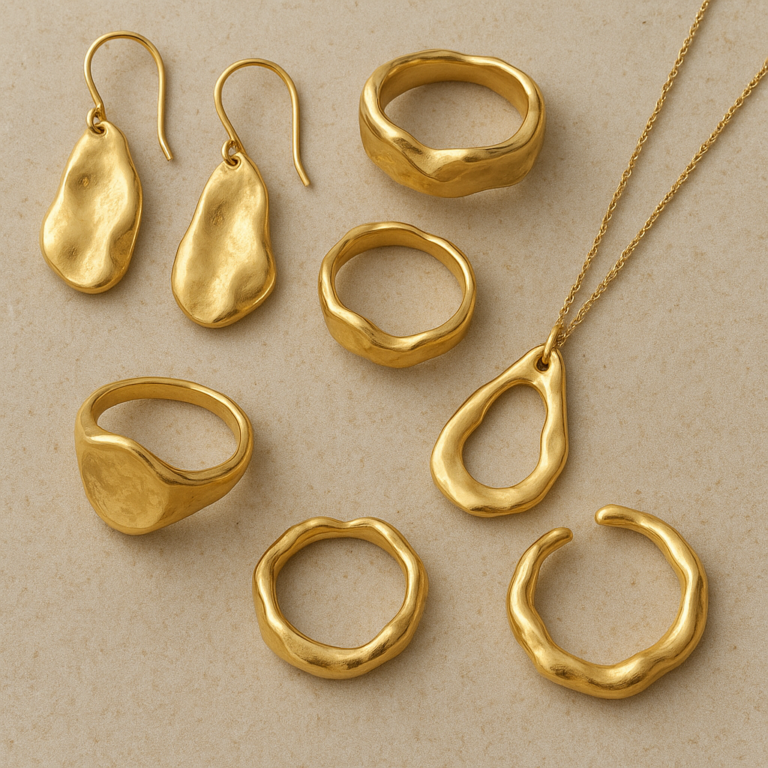
Georg Jensen is a strong choice for sterling-silver jewelry with sculptural, often organic forms. The designs tend to make silver the star rather than a quiet supporting act.
- Benefits: Distinctive shapes and a deep design heritage.
- Drawbacks: Polished silver can tarnish, and sculptural pieces may need a little more care in storage.
- Buying tip: Use a silver polishing cloth and keep pieces separate to prevent scratches.
👉 Shop Georg Jensen: Georg Jensen Official Website | Georg Jensen on Amazon
8. David Yurman: Silver, Gold, and Mixed-Metal Designs
David Yurman is recognized for cable-inspired designs and combinations of sterling silver, gold, and gemstones. Its substantial pieces appeal to shoppers who like their jewelry to have some visual weight.
- Benefits: Strong signature style and a wide range of silver and mixed-metal pieces.
- Drawbacks: A bolder design may feel heavier or less versatile than a slim band or chain.
- Buying tip: Check the piece’s width, weight, and fit, especially for bracelets and rings.
👉 Shop David Yurman: David Yurman Official Website | David Yurman on Amazon
Diamonds and Colored Gemstones
Gemstone shopping asks more than “Is it pretty?” We’d also ask what stone it is, whether it has been treated, how it’s set, and what documentation comes with it. The GIA colored-stone buying guide explains why treatments and durability matter.
| Brand | Specialty | Helpful for |
|---|---|---|
| Blue Nile | Diamond jewelry and configurable settings | Comparing diamond options |
| James Allen | Diamond and gemstone settings | Online selection and customization |
| Brilliant Earth | Natural and lab-grown stones | Sourcing and stone-type comparisons |
| Angara | Colored gemstones and birthstones | Broad gem selection |
| Gemfields | Rubies and emeralds | Learning about mine-to-market sourcing initiatives |
| Kendra Scott | Colorful fashion jewelry and stones | Everyday color and giftable styles |
| Bario Neal | Custom fine jewelry, diamonds, and colored gems | Design-led sourcing conversations |
| Anabela Chan | Laboratory-grown gems and fashion-forward fine jewelry | Unusual, colorful designs |
9. Blue Nile: Diamond Jewelry Across Precious Metals
Blue Nile is a useful place to compare diamond jewelry and metal settings. Its range suits shoppers who want a classic look and a more systematic way to compare diamond characteristics.
- Benefits: Broad selection and diamond-focused product information.
- Drawbacks: Online shopping makes it harder to judge scale and sparkle in person.
- Buying tip: Review the stone’s grading report, return window, and setting details. A diamond’s cut can strongly affect how lively it looks; the GIA’s 4Cs overview explains the grading framework.
👉 Shop Blue Nile: Blue Nile Official Website | Blue Nile on Amazon
10. James Allen: Custom Diamond and Gemstone Settings
James Allen offers diamond jewelry and customizable settings, making it a contender for shoppers who want to compare stones and mounting styles.
- Benefits: Helpful for exploring how different settings change a ring’s look.
- Drawbacks: A virtual listing can’t replace checking fit, comfort, and setting security.
- Buying tip: Confirm the center stone’s grading documentation and ask how the setting protects the edges of the gem.
👉 Shop James Allen: James Allen Official Website | James Allen on Amazon
11. Brilliant Earth: Natural and Lab-Grown Diamond Options
Brilliant Earth offers both natural and lab-grown diamonds, alongside colored gemstones and multiple setting metals. That makes it useful for side-by-side comparisons, provided you keep the comparison fair: the origin, grading, cut, and documentation all matter.
Lab-grown diamonds have essentially the same chemical composition and crystal structure as natural diamonds, but their origin differs. The GIA’s lab-grown diamond guide explains the distinction.
- Benefits: Choice of origin, metal, and design.
- Drawbacks: “Lab-grown” does not automatically mean lower environmental impact in every circumstance; production methods and energy sources vary.
- Buying tip: Compare grading reports and warranty terms, not just the words “natural” or “lab-grown.”
👉 Shop Brilliant Earth: Brilliant Earth Official Website | Brilliant Earth on Amazon
12. Angara: Birthstone and Colored-Gemstone Jewelry
Angara offers an extensive range of colored gemstones and birthstone designs. It’s handy when your brief is specific—say, a sapphire pendant, garnet ring, or opal earrings—and you want to compare shapes and settings.
- Benefits: Broad selection of gem types and design formats.
- Drawbacks: Colored stones vary naturally, so color on a screen may differ from the piece in person.
- Buying tip: Check whether the gemstone is treated, its origin if disclosed, and the return policy before ordering.
👉 Shop Angara: Angara Official Website | Angara on Amazon
13. Gemfields: Responsibly Sourced Emeralds and Rubies
Gemfields is known for its work with emeralds and rubies and its public focus on responsible mining initiatives. It is useful to know as a source and industry name, while remembering that a mining company and a retail jewelry brand are not the same thing.
- Benefits: Helps shoppers learn about ruby and emerald sourcing initiatives.
- Drawbacks: A brand-level sourcing story does not independently verify every downstream jewelry item.
- Buying tip: For a finished jewel, ask the retailer to identify the stone, disclose treatments where known, and provide any available documentation.
14. Kendra Scott: Colorful Gemstone and Crystal Designs
Kendra Scott is a familiar name for colorful fashion jewelry, including gemstone-inspired styles and a range of materials. It’s especially useful for gift shopping and adding a bright accent to everyday outfits.
- Benefits: Color-forward designs and a broad assortment.
- Drawbacks: Materials and finishes can vary by product; don’t assume a colorful stone is a precious gemstone.
- Buying tip: Read the materials section carefully and follow the care instructions for plated finishes.
👉 Shop Kendra Scott: Kendra Scott Official Website | Kendra Scott on Amazon
15. Bario Neal: Ethical Diamonds and Colored Gems
Bario Neal offers custom fine jewelry and a mix of diamonds and colored stones, with a design approach that welcomes distinctive shapes and material choices.
- Benefits: Customization and a strong focus on design and sourcing conversations.
- Drawbacks: Custom work can involve more decisions and a longer process than buying a finished piece.
- Buying tip: Ask for written details about the stone, metal, treatments, and any sourcing claims before approving a custom design.
👉 Shop Bario Neal: Bario Neal Official Website | Bario Neal on Amazon
16. Anabela Chan: Lab-Grown Gems and Contemporary Fine Jewelry
Anabela Chan creates vivid, high-fashion jewelry using laboratory-grown gemstones and other unconventional materials. It’s a compelling option if your idea of “subtle” includes color that can be spotted from across the room.
- Benefits: Inventive color combinations and distinctive statement designs.
- Drawbacks: The dramatic scale may be less versatile for everyday wear.
- Buying tip: Check the exact material and care requirements; lab-grown gemstones are not all identical in hardness or chemical composition.
👉 Shop Anabela Chan: Anabela Chan Official Website
Pearls and Other Organic Materials
Pearls are organic gems, which means they deserve gentler treatment than many diamonds or sapphires. Perfume, hairspray, and household chemicals can damage their surface. The GIA pearl care guide recommends wiping pearls with a soft cloth after wear.
| Brand | Material focus | Style direction |
|---|---|---|
| Mikimoto | Cultured pearls | Classic and formal |
| TASAKI | Akoya, South Sea, and baroque pearls | Contemporary and architectural |
| Pearl Paradise | Freshwater and saltwater pearls | Broad pearl selection |
| Paspaley | Australian South Sea pearls | Luxury and statement pieces |
| Wwake | Pearls and gemstones | Modern, organic forms |
| Brinker + Eliza | Fashion jewelry with shell-inspired designs | Playful statement styles |
| Alighieri | Recycled-metal, sculptural designs | Textural and artistic |
17. Mikimoto: Cultured Pearl Jewelry
Mikimoto is a leading name in cultured-pearl jewelry, especially classic Akoya strands and elegant earrings. For shoppers who want a traditional pearl necklace, it offers a clear point of comparison for luster, matching, and finish.
- Benefits: Pearl expertise and enduring classic designs.
- Drawbacks: Pearls need regular, gentle care and are not ideal for rough daily wear.
- Buying tip: Compare luster, surface blemishes, matching, and clasp quality—not just pearl size.
👉 Shop Mikimoto: Mikimoto Official Website | Mikimoto on Amazon
18. TASAKI: Modern Akoya and South Sea Pearls
TASAKI pairs pearls with contemporary, sculptural settings. Its designs are a good reminder that pearls need not be confined to a formal strand and a family wedding photo.
- Benefits: Modern silhouettes and strong design identity.
- Drawbacks: Unusual settings may be less adaptable to classic outfits.
- Buying tip: Check how a pearl is secured and whether the setting allows professional cleaning.
👉 Shop TASAKI: TASAKI Official Website | TASAKI on Amazon
19. Pearl Paradise: Freshwater and Saltwater Pearls
Pearl Paradise focuses on pearl jewelry and offers a useful range for comparing freshwater and saltwater varieties.
- Benefits: Pearl-specific selection and education.
- Drawbacks: Online images can flatten differences in luster and color.
- Buying tip: Look for measurements, pearl type, strand length, clasp metal, and close-up photography.
👉 Shop Pearl Paradise: Pearl Paradise Official Website | Pearl Paradise on Amazon
20. Paspaley: Australian South Sea Pearls
Paspaley specializes in Australian South Sea pearls and luxury designs. These pearls are prized for their scale and rich appearance, making the brand worth exploring for a special-occasion heirloom.
- Benefits: A focused pearl specialty and distinctive South Sea designs.
- Drawbacks: Large or formal pieces may be less suited to daily use.
- Buying tip: Ask about pearl origin, grading terminology, and care advice for the specific piece.
👉 Shop Paspaley: Paspaley Official Website
21. Wwake: Organic-Inspired Pearls and Gemstones
Wwake blends pearls and gemstones in delicate, often irregular arrangements. Its designs suit shoppers who like the natural character of a stone rather than a perfectly symmetrical, traditional look.
- Benefits: Modern settings and organic shapes.
- Drawbacks: Small-scale pieces can be difficult to appreciate without checking measurements.
- Buying tip: Compare listed dimensions with jewelry you already own.
👉 Shop Wwake: Wwake Official Website | Wwake on Amazon
22. Brinker + Eliza: Shell-Inspired Statement Jewelry
Brinker + Eliza is a fashion-jewelry option for shell-like motifs and bold, vacation-ready styling.
- Benefits: Eye-catching forms and playful styling.
- Drawbacks: Fashion-jewelry components may need more care than solid precious-metal pieces.
- Buying tip: Confirm whether a piece uses actual shell, shell-inspired resin, or another material.
👉 Shop Brinker + Eliza: Brinker + Eliza Official Website | Brinker + Eliza on Amazon
23. Alighieri: Sculptural, Recycled-Metal Jewelry
Alighieri is known for sculptural, textured designs that feel like tiny found objects. Recycled-metal claims and finish details should be checked at the collection level.
- Benefits: Distinctive texture and art-inspired forms.
- Drawbacks: Uneven finishes are part of the aesthetic, which may not suit shoppers seeking a mirror polish.
- Buying tip: Read the material description and care instructions, especially for plated styles.
👉 Shop Alighieri: Alighieri Official Website | Alighieri on Amazon
Wood, Resin, Glass, and Ceramic Jewelry
Alternative materials open up color and scale that precious metals can’t always deliver. They can also be more vulnerable to scratches, heat, impact, or chemicals. For this category, material identification and care instructions are part of the purchase, not fine print.
| Brand | Material association | Best for |
|---|---|---|
| Monies | Wood and natural materials | Oversized sculptural jewelry |
| Alexis Bittar | Lucite and resin | Polished statement pieces |
| Lele Sadoughi | Resin and acrylic accents | Colorful accessories |
| Taty Devine | Laser-cut acrylic | Playful, graphic designs |
| Machete | Cellulose acetate | Color-rich everyday accessories |
| Completedworks | Ceramic, bio-resin, pearls, and metals | Experimental mixed-material designs |
| Sophie Buhai | Silver and sculptural stones | Minimalist statement pieces |
24. Monies: Bold Wood and Natural-Material Jewelry
Monies is a design-led option for substantial jewelry made with wood and other natural materials. These pieces make a strong case for skipping tiny studs and letting a necklace do the talking.
- Benefits: Sculptural scale and tactile material contrasts.
- Drawbacks: Large pieces can feel heavy; natural materials may need special storage.
- Buying tip: Check the stated material, weight, and cleaning instructions before purchasing.
👉 Shop Monies: Monies Official Website
25. Alexis Bittar: Lucite and Handcrafted Resin Jewelry
Alexis Bittar is associated with sculptural Lucite and resin designs, often paired with metalwork and strong color.
- Benefits: A distinct, polished look that adds visual impact without relying on large gemstones.
- Drawbacks: Resin and acrylic can scratch and should not be treated like sapphire or diamond.
- Buying tip: Store pieces separately and avoid solvents or harsh cleaners unless the brand specifically recommends them.
👉 Shop Alexis Bittar: Alexis Bittar Official Website | Alexis Bittar on Amazon
26. Lele Sadoughi: Colorful Resin and Acrylic Accessories
Lele Sadoughi offers bright, playful accessories, including pieces with resin and acrylic details. It’s a good fit for shoppers who want color first and subtlety a distant second.
- Benefits: Cheerful statement styling and strong color options.
- Drawbacks: Trend-led designs may be less versatile than classic metal staples.
- Buying tip: Look at product measurements and the full material list; “acrylic” and “resin” are not interchangeable with glass or gemstone.
👉 Shop Lele Sadoughi: Lele Sadoughi Official Website | Lele Sadoughi on Amazon
27. Taty Devine: Laser-Cut Acrylic Statement Pieces
Taty Devine uses laser-cut acrylic to create graphic, playful jewelry. The brand is a strong option when you want a piece that starts conversations before you do.
- Benefits: Distinctive shapes and lightweight statement styles.
- Drawbacks: Acrylic can scratch or crack if bent or knocked against hard surfaces.
- Buying tip: Store flat or in a padded pouch, and keep away from heat.
👉 Shop Taty Devine: Taty Devine Official Website
28. Noura Sakkijha: Contemporary Glass and Metal Designs
Noura Sakkijha is included here as a design reference for contemporary material mixing and glass-inspired looks. Product offerings can change, so verify the materials listed for the specific design you’re considering.
- Benefits: Modern approach to color and mixed materials.
- Drawbacks: A designer name alone does not establish whether an element is glass, crystal, or another material.
- Buying tip: Ask the retailer to clarify the component material if the listing is vague.
29. Machete: Acetate and Color-Forward Jewelry
Machete is best known for colorful accessories and acetate designs. Its pieces are useful when you want a saturated color story without the weight of a large metal necklace.
- Benefits: Lightweight, expressive colors and easy-to-style shapes.
- Drawbacks: Acetate can be damaged by heat and certain chemicals.
- Buying tip: Keep it away from hot cars, hair products, and strong solvents.
👉 Shop Machete: Machete Official Website | Machete on Amazon
30. Shlomit Ofir: Ceramic and Handcrafted Statement Jewelry
Shlomit Ofir offers handcrafted designs and statement styles. Check individual descriptions for the exact components, particularly when a piece combines ceramic, metal, and other decorative elements.
- Benefits: Artisan character and eye-catching forms.
- Drawbacks: Ceramic can chip or break if dropped.
- Buying tip: Put ceramic jewelry on after getting dressed and remove it before sport, cleaning, or sleep.
Alternative, Recycled, and Sustainable Materials
“Recycled” is useful information, but it is not a complete impact report. Ask what is recycled, what percentage, and whether the claim applies to the metal, packaging, or the whole piece. Recycled metals may reduce demand for newly mined material, but gemstone sourcing and manufacturing still deserve separate scrutiny.
| Brand | Material or approach | What to verify |
|---|---|---|
| SOKO | Artisan-made designs using recycled brass in selected work | Material details and artisan production information |
| Article22 | Recycled aluminum in designs made from reclaimed materials | The material origin and current impact claims |
| Pippa Small | Gold and artisan-made jewelry | Metal sourcing and production details |
| Vrai | Lab-grown diamonds and precious-metal settings | Diamond documentation and metal composition |
| Lark & Berry | Lab-grown diamonds and pearls | Stone type, metal, and care requirements |
| CLED | Recycled metals and laboratory-grown stones | Product-level disclosures |
| Edge of Ember | Recycled metals and selected lab-grown or traceable stones | Exact sourcing claim for each collection |
| 4ocean | Recycled ocean-plastic bracelets | Current program details and material breakdown |
| Pura Vida | Cord and casual friendship bracelets | Fiber content, waterproof claims, and care |
| Rothy’s | Recycled-material accessories; jewelry range may vary | Confirm current jewelry availability and exact composition |
31. SOKO: Recycled Brass and Artisan-Made Jewelry
SOKO works with artisan makers and offers jewelry made with recycled materials in selected collections. It’s a thoughtful choice if you want distinctive fashion jewelry and are interested in the people and process behind production.
- Benefits: Artisan-centered design and material-conscious options.
- Drawbacks: Brass can tarnish or react differently on different skin types.
- Buying tip: Check whether a piece is plated and follow the brand’s guidance on moisture and storage.
👉 Shop SOKO: SOKO Official Website | SOKO on Amazon
32. Article22: Recycled-Bombshell Aluminum Jewelry
Article22 makes jewelry using reclaimed aluminum from Laos, including material derived from wartime remnants. Its story is unusually direct: a material associated with conflict is transformed into wearable objects and economic opportunity.
- Benefits: Lightweight material and a distinctive reuse story.
- Drawbacks: Aluminum jewelry has a different feel and finish from precious-metal fine jewelry.
- Buying tip: Read the brand’s current description of material sourcing and social impact rather than relying on a simplified tagline.
👉 Shop Article22: Article22 Official Website | Article22 on Amazon
33. Pippa Small: Recycled Gold and Artisan Craft
Pippa Small combines distinctive design with artisan craft and material-conscious production. It is appealing if you value an individual, hand-finished look over perfectly uniform, mass-produced pieces.
- Benefits: Strong design identity and emphasis on craft.
- Drawbacks: Handmade finishes may vary, and not every shopper wants an irregular look.
- Buying tip: Ask about the exact metal, stone, and sourcing information for the piece.
👉 Shop Pippa Small: Pippa Small Official Website
34. Vrai: Lab-Grown Diamonds and Recycled Gold
Vrai specializes in lab-grown diamond jewelry and offers modern fine-jewelry designs. It’s useful for shoppers who prefer a laboratory-grown diamond and want to compare the stone with different settings.
- Benefits: Diamond-focused selection and contemporary designs.
- Drawbacks: Lab-grown describes origin, not a universal guarantee about environmental impact or long-term resale.
- Buying tip: Review the diamond documentation, metal purity, and return or resizing policies.
👉 Shop Vrai: Vrai Official Website | Vrai on Amazon
35. Lark & Berry: Lab-Grown Diamonds and Pearls
Lark & Berry combines lab-grown diamonds with pearls and other fine-jewelry materials. The contrast can be especially appealing for shoppers who like classic gems in less traditional silhouettes.
- Benefits: A distinctive mix of modern and organic materials.
- Drawbacks: Pearls and diamonds need different care, even when they share a piece.
- Buying tip: Ask how to clean the entire item safely; a cleaner suitable for a diamond may harm a pearl.
👉 Shop Lark & Berry: Lark & Berry Official Website | Lark & Berry on Amazon
36. CLED: Recycled Precious Metals and Lab-Grown Gems
CLED is a brand to investigate for recycled-metal and laboratory-grown gemstone designs. As with any newer or sustainability-focused label, look for detailed product-level disclosures, not just broad brand language.
- Benefits: A combination of alternative sourcing and contemporary design.
- Drawbacks: The depth of public documentation can vary across brands and products.
- Buying tip: Confirm metal purity, gem origin, treatment, and any independent grading paperwork.
37. Edge of Ember: Recycled Gold and Traceable Gems
Edge of Ember offers modern jewelry using recycled metals and selected lab-grown or traceable stones. It also presents recycling initiatives for older jewelry, making it worth a look if circularity is part of your shopping priorities.
- Benefits: Contemporary designs and a visible focus on material reuse.
- Drawbacks: “Traceable” can mean different things, so check what the brand can document.
- Buying tip: Ask whether the claim applies to the full piece or only a particular material.
👉 Shop Edge of Ember: Edge of Ember Official Website | Edge of Ember on Amazon
38. 4ocean: Recycled Ocean-Plastic Bracelets
4ocean sells casual bracelets associated with its ocean-cleanup work and recycled materials. The appeal is a combination of accessible styling and an environmental mission, but the impact claim is the thing to verify.
- Benefits: Easy-to-wear, casual bracelets with a clear cause-oriented identity.
- Drawbacks: Cord-and-plastic designs are not heirloom jewelry and may wear differently from metal pieces.
- Buying tip: Check the current product page for the exact materials and cleanup-program details.
👉 Shop 4ocean: 4ocean Official Website | 4ocean on Amazon
39. Pura Vida: Recycled and Waterproof Cord Bracelets
Pura Vida is known for casual cord bracelets and colorful stacking. Some styles or collections may use recycled components, so check the item rather than assuming every bracelet has the same fiber or finish.
- Benefits: Lightweight, easy to layer, and relaxed in style.
- Drawbacks: Cord bracelets can stretch, fray, or fade with use; “waterproof” does not mean indestructible.
- Buying tip: Treat waxed-coton and nylon bracelets as everyday fashion accessories, not heirloms.
👉 Shop Pura Vida: Pura Vida Official Website | Pura Vida on Amazon
40. Rothy’s: Recycled-Material Jewelry and Accessories
Rothy’s is better known for accessories and products made with recycled materials than for a dedicated jewelry specialty. If a jewelry item appears in its current range, verify its composition directly; brand-level sustainability messaging does not tell you what a particular accessory is made from.
- Benefits: A recognizable materials-conscious brand to watch.
- Drawbacks: Jewelry availability and product materials may change.
- Buying tip: Use the current product description and materials list as your source of truth.
Artisan, Cultural, and Heritage Materials
Some jewelry brands stand out less for one raw material than for the way they work with it: hand engraving, enameling, metal weaving, beadwork, or heritage techniques. That craft is part of the material story, but it is still reasonable to ask about the metal, stones, and production details.
41. Dodo: Gold and Enamel Charms
Dodo is known for charm-led jewelry, including gold and enamel designs. It’s a good choice for people who want a personal-symbol collection that can grow over time.
- Benefits: Playful motifs and a modular approach to collecting.
- Drawbacks: Small charms and connecting components can be easy to lose.
- Buying tip: Check the clasp and connector compatibility before mixing pieces.
👉 Shop Dodo: Dodo Official Website | Dodo on Amazon
42. John Hardy: Handcrafted Silver and Gold
John Hardy is known for handcrafted silver and gold jewelry, often with woven or textured details. The work has a strong visual identity and appeals to shoppers who like visible craftsmanship.
- Benefits: Detailed construction and distinctive metalwork.
- Drawbacks: Textured links can collect residue and may need careful cleaning.
- Buying tip: Ask about cleaning and repair options for intricate chains and woven bracelets.
👉 Shop John Hardy: John Hardy Official Website | John Hardy on Amazon
43. Naga: Artisan-Made Silver Jewelry
Naga offers bold silver designs and pieces inspired by craft traditions. It’s a solid option for shoppers seeking substantial sterling-silver jewelry with texture.
- Benefits: Strong silver presence and detailed surfaces.
- Drawbacks: Large pieces can be heavy, and textured silver needs careful maintenance.
- Buying tip: Verify the silver fineness and check the fit of cuffs or statement rings.
👉 Shop Naga: Naga Official Website | Naga on Amazon
44. Chan Luu: Beaded, Cord, and Mixed-Material Jewelry
Chan Luu is recognized for layered, bohemian-inspired jewelry that may mix beads, cord, pearls, and metal details.
- Benefits: Easy layering and relaxed, textured styling.
- Drawbacks: Cord and beadwork may need more delicate care than solid metal chains.
- Buying tip: Keep beaded and cord pieces away from perfume and prolonged moisture.
👉 Shop Chan Luu: Chan Luu Official Website | Chan Luu on Amazon
45. Boucheron: High Jewelry in Precious Metals and Gemstones
Boucheron brings together precious metals, diamonds, and colored gemstones in high jewelry and fine-jewelry collections. It belongs on a material-focused shortlist for buyers studying exceptional gem setting and luxury craftsmanship.
- Benefits: Refined stone setting and an extensive design heritage.
- Drawbacks: High jewelry is not the practical choice for every budget or everyday routine.
- Buying tip: For any significant purchase, request full material documentation and care guidance.
👉 Shop Boucheron: Boucheron Official Website | Boucheron on Amazon
🔍 How to Choose a Jewelry Brand by Material
A useful buying decision begins with three questions: How often will you wear it? What do you need it to withstand? What does the material claim actually mean? The answers narrow the field faster than scrolling through a hundred almost-identical gold hoops.
Match the Material to Your Budget and Wear Habits
Use this simple guide as a starting point—not a promise that every item in a category behaves identically.
| If you want… | Consider… | Watch out for… |
|---|---|---|
| A piece to wear often | Solid gold, platinum, or well-made sterling silver | Loose settings, delicate chains, poor fit |
| Gold color with a lower material cost | Gold vermeil or gold plating | Wear through, water, friction, cosmetics |
| Colorful statement jewelry | Resin, acrylic, glass, enamel, or fashion stones | Scratches, chips, heat, chemicals |
| A classic special-occasion piece | Diamonds, fine colored gems, cultured pearls | Treatments, documentation, care needs |
| A personal or symbolic gift | Birthstones, initials, charms, pearls | Size, return policy, recipient’s metal sensitivities |
A simple rule we use: the more often you wear it, the more you should prioritize durability, repairability, and a comfortable fit. That could mean solid gold, but a carefully chosen sterling-silver pendant may be the better match for someone who removes jewelry every night.
Compare Solid Gold, Gold Vermeil, Gold-Filled, and Plated Jewelry
| Type | Basic construction | Best for | Key caveat |
|---|---|---|---|
| Solid gold | Gold alloy throughout the metal component | Frequent wear and long-term ownership | Higher material value; karat affects purity and properties |
| Gold vermeil | Gold layer over sterling silver, subject to legal standards in some markets | Gold look with a sterling-silver core | The gold surface can wear over time |
| Gold-filled | A mechanically bonded layer of gold over a base metal | More substantial gold surface than typical plating | Not solid gold; exact standards and labeling vary by market |
| Gold-plated | Thin gold layer over another metal | Fashion pieces and occasional wear | Thickness and base metal can vary widely |
The FTC Jewelry Guides explain U.S. standards for jewelry descriptions. Look for the base metal, gold karat, coating or layer description, and any thickness information. “Gold jewelry” can mean several different constructions, so that phrase alone is not enough.
Check Gemstone Quality, Treatments, and Origin
Before buying a colored gem or diamond, follow this sequence:
- Identify the stone. Is it sapphire, topaz, glass, crystal, or a simulant?
- Ask whether it is natural or laboratory-grown. Both can be genuine gemstones, but their origins differ.
- Check for treatments. Heat, filling, dyeing, or irradiation can affect appearance, durability, and value.
- Review the setting. Prongs, bezels, and the stone’s position affect how exposed it is to knocks.
- Read the report. For a major diamond or gemstone purchase, see what independent documentation is available.
- Confirm return and repair terms. A beautiful stone is less fun if the setting cannot be serviced.
The GIA’s consumer guides are a reliable starting point for understanding gemstone descriptions. For diamonds, remember the familiar 4Cs—cut, color, clarity, and carat weight—but also consider how the stone looks to your eye and whether it suits the setting.
Understand Lab-Grown and Natural Diamonds
A lab-grown diamond is not a simulant like cubic zirconia. It has the same basic chemical composition and crystal structure as a natural diamond, but it forms in a laboratory rather than underground. The GIA explains the distinction here.
| Question | What to compare |
|---|---|
| Is it a diamond? | Confirm that the listing says lab-grown diamond, not a diamond simulant |
| How does it look? | Compare cut, color, clarity, and carat weight |
| What paperwork comes with it? | Check for a grading report and the issuing laboratory |
| What about sourcing? | Ask about the producer and any environmental disclosures |
| Is resale value a priority? | Research carefully; natural and lab-grown diamonds can have different resale markets |
There is no one right choice. Some shoppers prioritize geological origin; others prefer a lab-grown stone’s availability or price-to-size tradeoff. Choose based on your priorities, not on a salesperson’s claim that one origin is automatically “better.”
Look for Responsible Sourcing and Recycled Materials
A practical sourcing checklist:
- Name the material: recycled gold, recycled silver, lab-grown diamond, reclaimed aluminum, or something else?
- Ask what the claim covers: the whole piece, the metal only, packaging, or one collection?
- Look for standards and scope: a certificate or membership is useful only when you understand what it verifies.
- Separate metal and gemstone sourcing: recycled gold does not automatically mean a diamond or colored gemstone is traceable.
- Check for reporting: specific percentages and supply-chain information are more useful than broad feel-good language.
- Keep receipts and certificates: they help with insurance, repairs, and resale questions.
The Responsible Jewellery Council describes its standards and certification framework. For diamonds, the Kimberley Process addresses trade in conflict diamonds, but it is not a complete ethical-sourcing guarantee covering every labor or environmental issue.
Review Craftsmanship, Warranty, and Repair Services
A good material can still be let down by weak construction. Before ordering, inspect:
- Clasp: Does it close securely? Is there a safety catch?
- Prongs and bezels: Are stones held firmly and evenly?
- Links and jump rings: Are connections closed neatly?
- Earring backs: Are they suitable for the earring’s weight?
- Finish: Is the polish, plating, enamel, or texture even?
- Care and repair: Can the brand resize, replate, replace, or clean it?
If you can, try on a similar piece in person. Online reviews can help reveal sizing and service patterns, but they’re not laboratory testing. Look for detailed reviews discussing wear duration, tarnishing, comfort, repair experience, and customer service, not just “pretty!” with a heart emoji.
🛍️ Curated Jewelry Picks by Material and Occasion
There isn’t one universal “best” material. A pearl necklace is a romantic gift; it is not the obvious choice for someone who wears their jewelry into a pool. These pairings make a sensible shortlist.
| Need | Good material direction | Brands to browse |
|---|---|---|
| Everyday staples | Solid gold or sterling silver | Mejuri, Catbird, Georg Jensen |
| Sensitive ears | Nickel-free gold, platinum, or suitable titanium | Tiffany & Co., Cartier |
| Meaningful gift | Birthstone, pearl, or charm | Angara, Mikimoto, Dodo |
| Bold outfit | Acrylic, resin, silver, or sculptural wood | Alexis Bittar, Monies, Taty Devine |
| Engagement or heirloom | Platinum or gold with documented diamonds or colored gems | Blue Nile, Bario Neal, Tiffany & Co. |
Best Materials for Everyday Jewelry
For frequent wear, consider solid gold, platinum, or sterling silver, then choose a design with secure construction. A thin chain can be durable in solid gold but still vulnerable to a sudden tug; a sturdy silver ring can be more practical than a delicate gold-plated one.
- Browse Mejuri or Catbird for fine, lightweight styles.
- Consider David Yurman or Georg Jensen for more substantial silver.
- Remove jewelry before swimming, cleaning, or exercising unless the maker explicitly says otherwise.
Best Materials for Sensitive Skin
If jewelry irritates your skin, start by identifying the metal—not by hoping a different brand name solves the mystery. Nickel is a common contact allergen, and the American Academy of Dermatology explains allergic contact dermatitis and common triggers.
Try:
- Platinum or solid gold with a clearly stated alloy.
- Sterling silver from a reputable brand, while checking any plating and components.
- Titanium or niobium for piercing jewelry when appropriate and correctly specified.
Avoid assuming “hypoallergenic” means allergy-proof. Check earring posts, backs, clasps, and hidden components; the post may not match the decorative front.
Best Materials for Gifts and Birthstones
Birthstone jewelry can feel personal without requiring a guess at someone’s ring size. Angara offers a wide range of colored-gem designs, while Haverhill is another brand to explore for birthstone jewelry in precious metals.
For pearls, consider Mikimoto for classic styling or TASAKI for a contemporary approach. Before gifting, check return terms and whether the recipient prefers yellow gold, white gold, silver, or mixed metals—a small detail that can save a large amount of polite pretending.
Best Materials for Statement Jewelry
If you want scale and color without a heavy precious-metal piece, look at acrylic, resin, wood, or sculptural silver.
- Acrylic and resin: Alexis Bittar and Taty Devine
- Wood and natural materials: Monies
- Sculptural silver: Georg Jensen
- Colorful fashion jewelry: Kendra Scott
Check weight and dimensions. A large earring may be fabulous on a product page and much less fabulous after six hours of tuging on your earlobe.
Best Materials for Engagement and Heirloom Pieces
For a piece intended to last through years of wear, prioritize a durable setting, a serviceable design, clear documentation, and a metal that suits the wearer.
- Platinum: Often chosen for engagement settings and frequent wear; verify the purity and maintenance recommendations.
- Gold: A versatile option in multiple karats and colors; compare alloy and durability.
- Diamonds and colored gems: Confirm treatments and documentation where appropriate.
- Pearls: Beautiful heirloms, but more vulnerable to chemicals and abrasion.
Explore Brilliant Earth, Bario Neal, Tiffany & Co., and Cartier. A proper fit and secure setting matter as much as a prestigious box.
🧼 Jewelry Care by Material
One care routine does not fit all jewelry. The safest universal habit is simple: put jewelry on last, take it off first, and store it dry and separately. Then follow the maker’s instructions for that material.
How to Clean Gold, Silver, and Platinum
- Check for gems or delicate details. A cleaning method safe for plain metal may harm pearls, enamel, or glued components.
- Use mild soap and lukewarm water only when appropriate.
- Use a soft cloth or soft brush. Avoid abrasive pads.
- Rinse carefully and dry completely.
- Store pieces separately to reduce scratches and tangling.
Sterling silver naturally tarnishes when exposed to air and certain substances. Use a silver cloth or cleaner recommended for the piece. For intricate or valuable jewelry, consult a professional. The GIA jewelry-care resources provide material-specific advice.
How to Care for Diamonds and Colored Gemstones
- Check whether the stone has been treated; some treatments are sensitive to heat, chemicals, or ultrasonic cleaning.
- Keep gemstones away from knocks, even if they are relatively hard.
- Store pieces separately so harder gems don’t scratch softer stones or metal.
- Have settings inspected periodically if the jewelry is worn frequently.
- Use a professional jeweler for cleaning when the stone or treatment is uncertain.
Don’t assume every colored gemstone can go in an ultrasonic cleaner. The GIA’s gemstone-care guidance explains why the correct method depends on the gem and its treatment.
How to Store Pearls and Organic Materials
Pearls are not fans of perfume, hairspray, and rough storage. Wipe them with a soft cloth after wearing, and keep them in a pouch or lined box away from sharp jewelry. The GIA pearl-care guide recommends gentle cleaning and careful storage.
For wood, shell, and other organic materials:
- Keep them away from prolonged moisture and high heat.
- Avoid household cleaners and solvents.
- Store separately from metal pieces and sharp stones.
- Follow the maker’s care instructions; surface treatments vary.
How to Protect Resin, Wood, Glass, and Ceramic Jewelry
- Resin and acrylic: Avoid heat, scratching, and solvents.
- Wood: Keep dry and follow the brand’s finish-care instructions.
- Glass: Protect from impact and store in padded compartments.
- Ceramic: Avoid drops and hard knocks; chips may be difficult to repair.
- All statement pieces: Remove before sport, sleep, household cleaning, or rough activity.
That colorful acrylic cuff may be lightweight, but it is not a cast-iron skillet. Treat it accordingly.
❓ Frequently Asked Questions About Material-Specific Jewelry Brands
Which jewelry materials last the longest?
Platinum and solid gold are strong candidates for long-term ownership, especially when the design is well made and repairable. Sterling silver can also last for decades with proper care, though it tarnishes and may scratch. Longevity depends on the piece’s construction, how often it is worn, and whether it is maintained—not just the material name.
What jewelry materials are best for sensitive skin?
Platinum, clearly specified solid gold, and suitable titanium are common choices for people concerned about metal reactions. Nickel is a frequent cause of allergic contact dermatitis, according to the American Academy of Dermatology. Check hidden components such as posts, clasps, and backs; “hypoallergenic” is not a guarantee that no one will react.
Is recycled gold as durable as newly mined gold?
Yes, once refined and alloyed to the same specification, recycled gold can have the same material properties as newly mined gold. The key questions are purity, alloy, workmanship, and how the brand documents its recycled-content claim. “Recycled gold” describes the source, not a different kind of gold.
Are lab-grown diamonds real diamonds?
Yes. Lab-grown diamonds have the same basic chemical composition and crystal structure as natural diamonds, but they are created in a laboratory. They are different from diamond simulants such as cubic zirconia. The GIA’s comparison explains the distinction.
How can you tell if a jewelry brand uses ethically sourced materials?
Look for specific, product-level disclosures, including what material is sourced, from where, under which standard, and what that standard covers. Certifications can help, but no single label answers every question about labor, environmental impact, and traceability. Ask for details about gemstones separately from metals.
Which brands specialize in pearls, wood, or resin?
For pearls, start with Mikimoto, TASAKI, or Pearl Paradise. For wood and natural materials, explore Monies. For resin, Lucite, or acrylic, look at Alexis Bittar, Taty Devine, and Machete. Confirm the exact material on each item.
Which companies are known for using sustainable alternative materials in jewelry?
Brands to research include Article22 for reclaimed aluminum, SOKO for artisan-made designs and recycled-material options, 4ocean for ocean-plastic bracelets, and Edge of Ember for recycled-metal collections. Their approaches differ, so compare the material, scope of the claim, and supporting evidence rather than treating “sustainable” as one standardized material category.
Where can I find brands specializing in lab-grown gemstones?
For lab-grown diamonds, look at Vrai, Brilliant Earth, and Lark & Berry. For other laboratory-grown gems, Anabela Chan is known for colorful, contemporary designs. Check whether the gem is diamond, sapphire, or another material and request documentation when relevant.
What jewelry brands offer high-quality titanium pieces?
Titanium is especially common in body jewelry and contemporary industrial design. For piercing jewelry, prioritize clearly specified implant-grade titanium and professional advice from a reputable piercer; do not assume ordinary fashion jewelry uses the same grade. Brand availability changes, so check the exact alloy and relevant safety documentation rather than relying on a general “titanium” label.
Which designers focus exclusively on conflict-free diamonds?
“Conflict-free” is a narrow claim, and few broad jewelry brands focus exclusively on diamonds or can guarantee every ethical concern through one label. The Kimberley Process addresses trade in conflict diamonds, but it is not a complete assessment of labor or environmental conditions. Ask a brand for the stone’s origin, grading report, and sourcing standard; compare Vrai, Brilliant Earth, and Bario Neal based on the specific piece.
Are there reputable brands that only use recycled silver?
Some brands emphasize recycled silver, but “only” is a strong claim that may not apply to every product or collection. Monica Vinader and Agmes are worth researching for recycled-silver designs. Read each product’s composition and the brand’s current sourcing disclosure before assuming the whole catalog uses recycled metal.
What are the best luxury brands for platinum jewelry?
Cartier and Tiffany & Co. are prominent luxury brands with platinum jewelry offerings. Compare the exact piece’s platinum fineness, construction, stone setting, warranty, and aftercare. A luxury name is useful for finding service and design heritage, but the item’s specification is still what you are buying.
Which jewelry brands specialize in ethically sourced gold?
Brands including Catbird, Mejuri, Bario Neal, and Monica Vinader offer collections or disclosures involving recycled or responsible sourcing. The details vary by product. Check whether the claim refers to recycled content, certified gold, the entire supply chain, or a specific collection.
What brands offer unique resin or acrylic jewelry pieces?
Try Alexis Bittar for sculptural Lucite and resin, Taty Devine for graphic laser-cut acrylic, and Machete for colorful acetate. Each material has different care needs, so check the product description and avoid heat or harsh solvents.
Which jewelry brands focus on handmade pearl designs?
Mikimoto and TASAKI are established pearl specialists, while Wwake offers contemporary, organic-inspired pearl designs. Look at pearl type, luster, surface, matching, and how the pearl is attached. Keep pearls away from perfume and wipe them after wearing.
What are top jewelry brands known for gemstone collections?
For a wide selection of colored gems, consider Angara. For diamonds and settings, browse Blue Nile or James Allen. For distinctive fine-jewelry designs, explore Bario Neal and Anabela Chan. Compare stone identity, treatment, grading, setting, and returns.
Which brands specialize in sterling silver jewelry?
Georg Jensen is a strong choice for sculptural silver; David Yurman for bold, signature styles; and John Hardy for textured handcrafted designs. Check for a sterling-silver or 925 description and remember that silver can tarnish with exposure to air and chemicals.
What are the best jewelry brands for gold pieces?
For everyday fine jewelry, explore Mejuri and Catbird. For heritage luxury designs, consider Tiffany & Co. or Cartier. Compare karat, solid gold versus vermeil or plating, design weight, and repair policies. The best brand is the one whose exact piece matches your material and wear needs.
How should you care for pearls and plated jewelry?
Put both on after cosmetics and remove them before bathing, swimming, or exercise. Wipe pearls gently after wear; store plated jewelry dry and separately to limit friction. For pearls, follow the GIA care guidance; for plated finishes, follow the brand’s own instructions because coatings differ.
What should you check before buying jewelry online?
Check the exact material, dimensions, ring or chain sizing, gemstone details, return window, warranty, and repair options. For diamonds and significant gems, look for a grading report and verify who issued it. Read customer reviews for recurring comments about fit, finish, tarnishing, durability, and customer service rather than relying only on star ratings.